Quick Answer
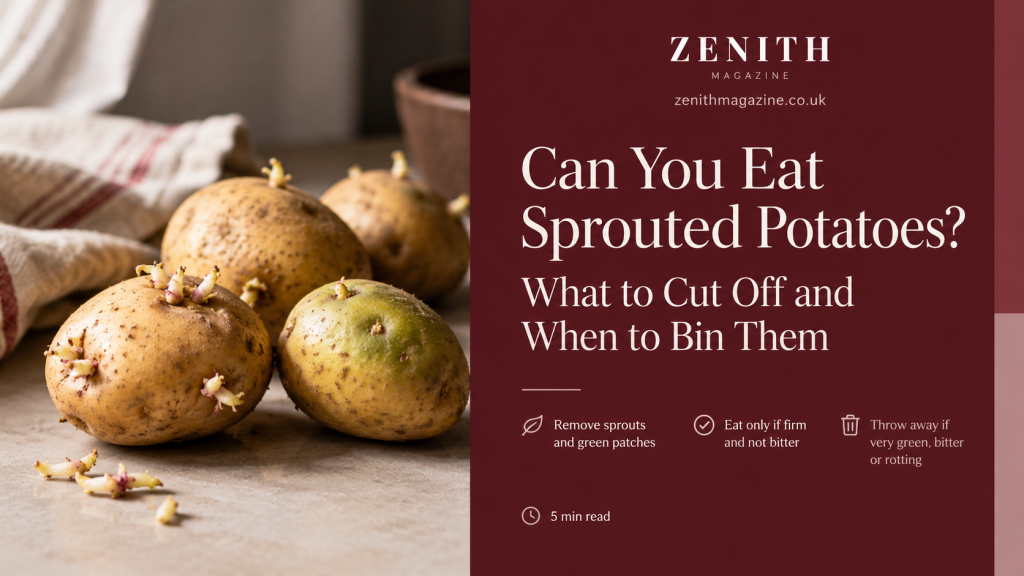
Often yes, with care. If a potato is still firm, you can remove the sprouts and any green patches and cook the rest. Never eat the green parts, and throw the potato away if it still tastes bitter after trimming, or is very green or visibly rotting. Green and sprouted areas can hold higher levels of natural toxins that upset the stomach.
Key Takeaways
- Sprouts and green skin are two different warnings. Sprouts mean the potato has been stored somewhere too warm. Green means it has been exposed to light, and it is the sign to take most seriously.
- Taste is your final check. If a trimmed potato still tastes bitter, the Food Standards Agency (FSA) says not to eat it.
- Cooking does not make a very green or bitter potato safe, so trim first rather than relying on the heat.
What sprouts and green patches on potatoes actually mean
Can you eat sprouted potatoes? In most cases a small amount of sprouting is not a reason to bin the bag, but the details matter, because the sprouts and the green are not the same problem.
All potatoes contain natural toxins called glycoalkaloids (solanine is the best known), usually at low levels. The FSA’s natural toxins factsheet says higher levels can be found in the green parts of potatoes, in sprouted potatoes and in potatoes stored in light. It describes glycoalkaloid poisoning as very rare, but says to store potatoes in a dark, cool, dry place and not to eat green or sprouting parts. In the FSA’s wording, high levels can upset the digestive system and cause abdominal pain, vomiting and diarrhoea.
The green colour itself is chlorophyll, the harmless pigment that plants make in light. Love Food Hate Waste, the campaign run by the waste charity WRAP, explains that it can go hand in hand with a rise in the toxin solanine. So green is best treated as a warning flag rather than the toxin itself.
Sprouts are the potato trying to grow. They are a sign of age and warm storage, and they are one of the places where glycoalkaloids concentrate.
When you can cut sprouted or green potatoes away
You can usually rescue a potato that meets all of these conditions:
- it is still firm
- the sprouts are small
- any green is limited to small patches
- it does not taste bitter once trimmed
The FSA advice, as reproduced on a Northern Ireland education health website, is to remove the sprouts before use and to cut off any green or rotten bits. Love Food Hate Waste says that sprouted potatoes are safe to eat once the shoots have been rubbed off, and that if there are small amounts of green you can cut it off and use the potato.
How to trim a sprouted potato
- Snap or rub off the sprouts.
- Cut out the eyes (the small pits the sprouts grow from).
- Peel away any green skin, and cut out any green flesh beneath it.
- Cut off any rotten or damaged areas.
- If the potato still tastes bitter once cooked, do not eat it. The FSA says bitterness after trimming is a reason to throw it away.
A final point on timing. A potato that has sprouted keeps less well. Worcestershire County Council’s food waste advice notes that sprouted potatoes are safe to cook but do not keep well and are more likely to go black when cooked, so use them up soon.
When to throw sprouted or green potatoes away
Bin the potato when:
- There is a lot of green. Love Food Hate Waste says that if there is a lot of green, it is best to throw the potato away.
- It tastes bitter after trimming. This is the FSA’s rule.
- It is rotting. The FSA’s advice is to cut off rotten bits, and a potato that is rotten throughout cannot be trimmed back to something safe. That second part is our interpretation.
Do not assume that cooking will save it. The Love Food Hate Waste campaign’s New Zealand site notes that the natural toxins in green potatoes may not be destroyed by cooking. Health Canada also warns not to assume the toxin level has dropped just because green colour fades after storing potatoes in the dark.
If anyone feels unwell after eating green or sprouted potatoes, seek medical advice, for example by calling NHS 111.
| What you see | What to do | Basis |
| Firm potato with small sprouts, no green | Remove sprouts and eyes, then cook | FSA advice, Love Food Hate Waste |
| Small patch of green | Cut it out, peel away the green, then cook | FSA advice, Love Food Hate Waste |
| A lot of green | Throw it away | Love Food Hate Waste |
| Still bitter after trimming | Do not eat it | FSA |
| Wrinkled or soft but no sign of decay | Fine to use, though the quality will be lower | FSA advice on vegetables past their best before date |
| Rotten or mouldy | Cut off rotten parts if small, otherwise bin it | FSA advice, with our interpretation for widespread rot |
Why potatoes sprout
Warmth is the main trigger. The National Potato Council in the United States says potatoes sprout when they are in temperatures that are too warm, because the tuber is trying to grow. Research from the University of Idaho, reported in The Western Producer, suggests ideal storage temperatures of 5.5 to 10°C, whereas homes are usually kept at 18 to 22°C, well above that range.
A Scottish research project (SEFARI, which brings together Scottish research institutes) found that storing potatoes at 5°C significantly reduced sprouting compared with storage at 18°C. The same project says UK households waste more than 700,000 tonnes of potatoes a year, and that “not used in time” is the largest cause, leading to greening, rot, mould and sprouting. Those figures are the researchers’ estimate and are older than this article, so treat them as a guide to scale.
The practical lesson: a sprouting potato is mostly a sign of how long it has sat in a warm kitchen.
Storing potatoes to stop sprouting and greening
Light and warmth are the two things to control.
- Keep them dark. Light causes greening. Sainsbury’s has used opaque packaging to stop potatoes turning green in store, which shows how seriously light is taken.
- Keep them cool. Avoid warm spots such as next to the oven or under the sink.
- Let them breathe. Love Food Hate Waste suggests taking potatoes out of plastic packaging and storing them in a paper bag or cardboard box. Worcestershire County Council suggests a cloth or natural fibre bag.
- Do not wash them before storing. Love Food Hate Waste says unwashed potatoes last longer.
- Buy what you will use. The FSA’s advice is simple: store them somewhere dark, cool and dry, and check the bag regularly.
Should potatoes go in the fridge?
Advice has changed here. Older guidance said no, partly over concern that cold storage raises sugars that form acrylamide when potatoes are fried, roasted or baked. Love Food Hate Waste now recommends keeping potatoes in the fridge at below 5°C, saying the science shows no safety issue and that fridge storage helps them last longer. The FSA-derived advice on the Northern Ireland site says you can store potatoes either in the fridge or in a cool, dark, dry place.
If you have the space, the fridge is the best way to slow sprouting. If you do not, a cool, dark cupboard works, but check the bag more often.
Frequently Asked Questions
Are sprouted potatoes safe to eat?
If the potato is firm and the sprouts are small, usually yes, once you remove the sprouts, the eyes and any green. Throw it away if it is very green, rotting or still tastes bitter after trimming. Sprouted areas can contain higher levels of natural toxins.
Can you eat potatoes with green skin?
Only after trimming. The FSA says green parts can contain higher levels of glycoalkaloids, so cut them off and peel away any green flesh. If there is a lot of green, or the potato tastes bitter after trimming, throw it away.
Does cooking make green or sprouted potatoes safe?
Not reliably. The sources we reviewed say the toxins may not be destroyed by cooking, so trimming matters more than boiling, baking or frying. If the potato still tastes bitter after you have removed the green and sprouts, do not eat it.
Can you eat wrinkly or soft potatoes?
Usually yes, as long as there is no sign of decay. The FSA says vegetables past their best before date can become wrinkly or mushy but are safe to eat if there is no visible decay. Cut off any rotten bits, and bin the potato if rot has spread.
Should you store potatoes in the fridge?
You can. Love Food Hate Waste now recommends the fridge at below 5°C to help potatoes last longer, and FSA-derived advice allows either the fridge or a cool, dark, dry place. If you use a cupboard, keep it dark and away from heat.
Can you give green or sprouted potatoes to pets?
No. Love Food Hate Waste advises against feeding green potatoes to animals, as they could make them sick. For more on what pets can and cannot eat, see our guide to which human foods dogs can eat.