Quick Answer
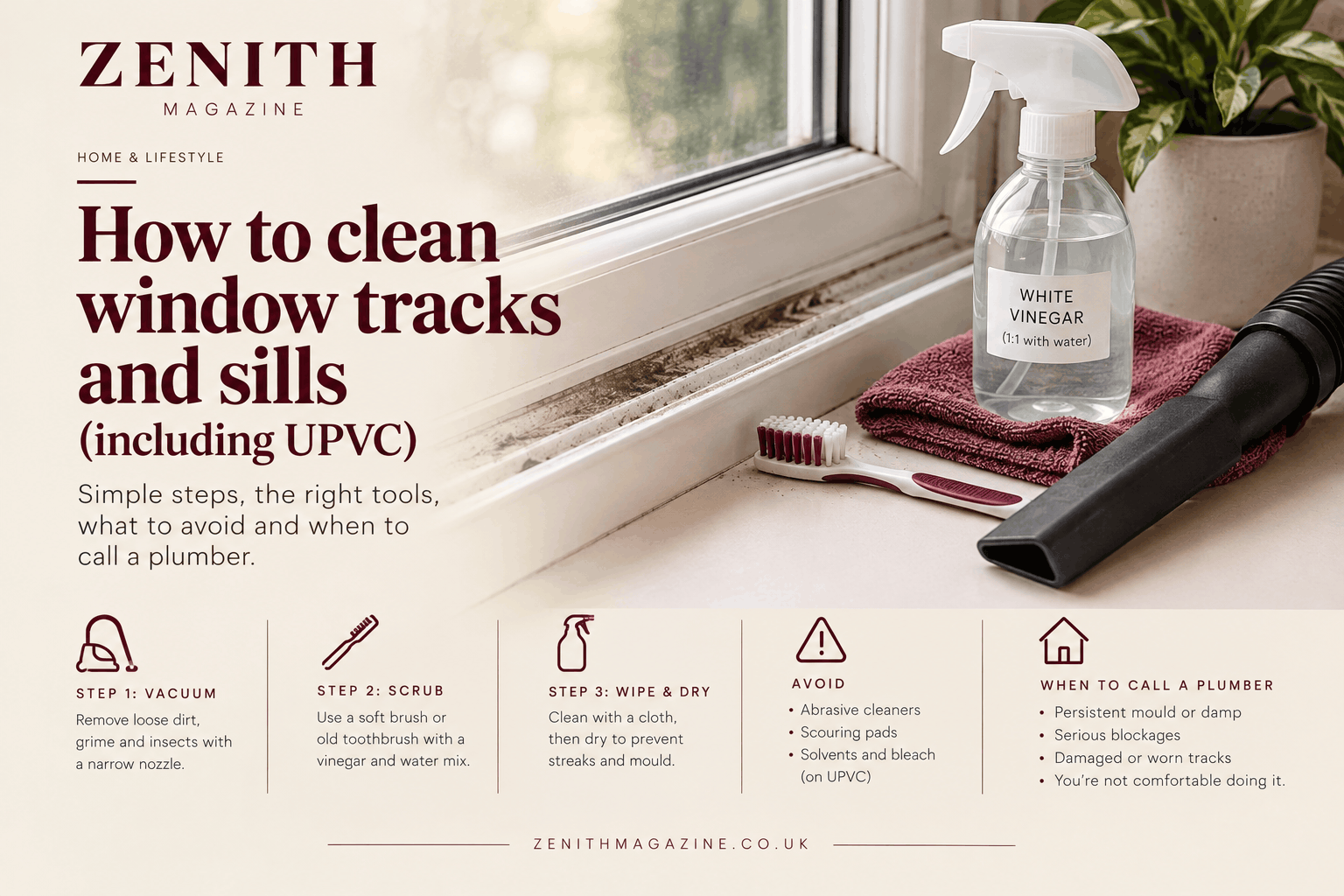
The quickest way is to vacuum out the loose grit with a narrow nozzle, scrub the track with a toothbrush and a vinegar and water spray, then wipe it dry. Use only soft tools on UPVC, because abrasives and solvents can scratch or damage it. Advice on bleach for mould conflicts between sources, so test a hidden spot first.
Key Takeaways
- Vacuum first, then scrub. Steam or liquid over dry debris turns it to paste, so loose dirt comes out before anything wet goes in.
- UPVC manufacturers and retailers say no abrasive cleaners, scouring pads, wire brushes or solvents. Warm water, washing-up liquid or diluted white vinegar is the gentle route.
- Mould in window seals is usually a condensation problem. Cleaning it off is only a temporary fix unless the moisture is dealt with.
Window tracks collect grit, dead insects and damp, and most of it is easy to shift once you do it in the right order. This guide pulls together advice from UPVC makers, UK retailers and cleaning guides. We have not tested any of the methods ourselves, and where the sources disagree, we say so.
What you need
Most guides call for the same short kit. The UK-specific lists from Screwfix and Cleanipedia (a Unilever cleaning site) include:
- A vacuum with a narrow nozzle or brush attachment.
- A soft brush or an old toothbrush.
- A spray bottle, warm water, washing-up liquid and white vinegar.
- Soft cloths or a non-abrasive sponge, plus a dry cloth or microfibre cloth.
- Rubber gloves.
Best window track cleaning brush tool
For a best window track cleaning brush tool, the sources point to the humble toothbrush. Bob Vila uses one for the vertical and bottom tracks, and Screwfix suggests a soft brush or old toothbrush for edges, seals and grooves. We have not tested brushes against each other, so we do not name a best buy.
Best tool to clean narrow window tracks
For the best tool to clean narrow window tracks, Bob Vila wraps a clean, dry rag around a butter knife to reach corners the brush cannot, changing to a clean section as it fills. Cleanipedia suggests a cardboard tube or brush nozzle on the vacuum to reach corners. Do not use a knife on UPVC without a thick wrap, because scratches there are permanent.
Vacuum attachments for window tracks
For vacuum attachments for window tracks, a crevice tool is the usual choice. Bissell uses its crevice tool along the sill track, with gentle suction. Bob Vila says a brush attachment is optional and not necessarily recommended for the first pass, because it gets dirty in the process.
Loosening the dirt
How to clean window tracks, step by step
How to clean window tracks follows the same order in most guides. This version is built from Bob Vila, Cleanipedia and Bissell.
- Open the window fully so the track is exposed.
- Vacuum loose debris and dead insects with a narrow nozzle.
- Spray a mix of equal parts white vinegar and water (Bob Vila). Cleanipedia uses one cup of vinegar to four cups of warm water for frames and leaves it for ten minutes.
- Scrub top to bottom along vertical tracks and end to end along the bottom track, getting into corners.
- Wipe with a cloth or paper towel. Re-spray and wipe again if dirt remains.
- Dry the track before closing the window.
How to clean window tracks with baking soda and vinegar
How to clean window tracks with baking soda and vinegar is Bob Vila’s main method. Sprinkle an even dusting of baking soda along the track, spray the vinegar and water mix until it is saturated, and leave it to foam for 5 to 10 minutes. Then scrub and wipe as above. The method comes from a US site with no UPVC guidance, so on UPVC, test a small hidden area first.
How to clean window tracks with a toothbrush
How to clean window tracks with a toothbrush is simple: use it dry after vacuuming, or wet with the vinegar spray, and work into corners and grooves. Bob Vila scrubs vertical tracks top to bottom and the bottom track end to end. Screwfix says a soft brush or old toothbrush also suits seals, hinges and locks.
Using Q-tips to clean window grooves
For using Q-tips to clean window grooves, Bissell uses cotton swabs for weep holes and tight corners. Weep holes are the small drainage openings in the track that let rainwater out. A swab clears them without damaging anything. Use a fresh swab for a second pass.
Window track cleaning hack with sponge
For a window track cleaning hack with sponge, we found no source that describes a specific sponge trick, so we have not invented one. Screwfix lists a non-abrasive sponge in its kit for wiping frames, and says rough sponges and scouring pads can scratch UPVC.
Best spray cleaner for window tracks
For the best spray cleaner for window tracks, there is no tested winner. The sources suggest a diluted white vinegar spray (Bob Vila, Cleanipedia, Screwfix) or a UPVC cleaner (Screwfix, Homebuilding). Homebuilding warns against glass cleaner, white spirits, WD40 and scouring powder on UPVC. Check the label and test a hidden spot.
How to clean window tracks with dawn dish soap
How to clean window tracks with dawn dish soap is a US method. Dawn is a US washing-up liquid, and we found no source covering it for window tracks. In the UK, the sources suggest washing-up liquid in warm water: Cleanipedia uses a few drops in warm water for panes, and Screwfix uses mild detergent or washing-up liquid for frames.
Easiest way to clean sliding glass door tracks
The easiest way to clean sliding glass door tracks is the same order: vacuum, spray, scrub, wipe. We found no source specific to sliding doors, so this is our reading of the window track methods. The bottom track takes the most dirt, so spend your time there.
Cleaning UPVC tracks and sills
How to remove dirt from window frames
How to remove dirt from window frames is covered by Screwfix. Sweep away loose dirt and cobwebs, wash with warm water and mild washing-up liquid from the top down, and pay attention to corners and grooves. For stubborn marks, use a UPVC cleaner or a 50:50 mix of white vinegar and water for a few minutes. Rinse, then dry with a microfibre cloth. Sills get the same treatment (Cleanipedia).
What to avoid on UPVC
REHAU, a UPVC system maker, says not to use “aggressive or solvent-based care and polishing agents” or abrasive cleaners. It warns against spatulas, wire brushes and rough sponges, which can permanently damage the surface. Screwfix adds pressure washers to the list, and SharkNinja says UPVC damage is often irreversible and cannot be filled or varnished like wood.
| Product or tool | What the sources say |
| Warm water and washing-up liquid | Recommended (Screwfix, Cleanipedia) |
| White vinegar and water | Recommended (Screwfix, Cleanipedia, Homebuilding). Homebuilding says to dilute it and avoid long contact with sealant |
| Abrasive cleaners, scouring pads, wire brushes | Avoid (REHAU, Cleanipedia, Screwfix) |
| Solvents, white spirit, WD40, glass cleaner | Avoid (REHAU, Homebuilding) |
| Bleach | Sources conflict, see below |
How to clean aluminum window tracks fast
For how to clean aluminum window tracks fast, the only source that covers aluminium directly is Bissell. It says steam suits aluminium and some vinyl tracks, after vacuuming loose debris first. We found no UK source with aluminium-specific advice, so check the manufacturer’s care advice.
How to clean double hung window tracks
Double hung is a US term for a window with two sliding sashes. UK readers may know them as sash windows. For how to clean double hung window tracks, Bissell says to focus on the bottom sill track and open the window fully to expose it. We found no UK sash-specific guidance, so avoid taking sashes apart unless your manufacturer says how.
How to clean window tracks without removing screen
For how to clean window tracks without removing screen, we found no source that gives a method. Bob Vila removes the screen and hoses it, so this is not covered. If your windows have screens, check the manufacturer’s advice on removing them.
Steam cleaner for window tracks
For a steam cleaner for window tracks, the sources disagree. Bissell recommends steam for hardened build-up and clogged weep holes, with a vacuum first, but warns against steam on painted wood tracks and some UPVC frames and advises checking the window manufacturer’s guidance. SharkNinja promotes steaming doors and windows directly but does not mention tracks or seal cautions. If you use steam, treat it as an occasional deep clean and follow the manufacturer’s advice.
Mould in window seals
How to clean mold out of window tracks
For how to clean mold out of window tracks (the British spelling is mould), the guides split.
- Homebuilding (published 7 January 2023, updated 24 November 2025) says use a cloth with warm soapy water and a splash of white vinegar for small patches, and warns that bleach can cause permanent damage to UPVC.
- Anglian Home Improvements says to mix Milton sterilising fluid with warm water 50:50 and scrub with a soft cloth.
- Cleanipedia (updated 4 April 2023) suggests one part bleach to three parts warm water, or a specialised mould spray.
We have not tested these. Following the UPVC-specific guidance from Homebuilding, start with the gentlest option, test on a hidden spot, and wear gloves. Do not mix bleach with other cleaning products.
Why mould keeps coming back
Anglian says the most likely cause is condensation: “If you can stop condensation, mould won’t grow.” Homebuilding advises ventilating daily, keeping trickle vents open and clean, and using a dehumidifier in high-moisture rooms if the problem persists. It says removing mould is only a temporary fix.
Keeping them clean
How to grease sliding window tracks
For how to grease sliding window tracks, the source we found (Centra, a window maker) recommends a silicone-based spray lubricant after cleaning, because it dries quickly and stops dust sticking. It advises avoiding oil-based lubricants, which attract dirt. It does not mention grease, so we cannot say whether grease is suitable. It suggests cleaning and lubricating every 3 to 6 months, or sooner if the window gets hard to open. Check your manufacturer’s own advice first.
Painting window tracks after cleaning
For painting window tracks after cleaning, we found no source that gives guidance. SharkNinja says UPVC cannot be varnished or sealed like wood, and REHAU warns against solvent-based products. Ask your window maker before painting anything.
A quick vacuum each month, a wipe of the seals and a clear weep hole are the cheapest way to avoid the big clean next time.
Frequently Asked Questions
What is the quickest way to clean dirty window tracks?
Vacuum out the loose grit with a narrow nozzle, scrub with a toothbrush and a vinegar and water spray, wipe, and dry. Doing the vacuum first stops the dirt turning to sludge. Test a hidden spot first on UPVC, and avoid abrasives.
Can you use bleach on UPVC window tracks?
Sources disagree. Cleanipedia suggests diluted bleach for mould, while Homebuilding says bleach can cause permanent damage to UPVC and Screwfix lists bleach-based cleaners to avoid. Try washing-up liquid or diluted vinegar first, test a hidden spot, and never mix bleach with other products.
Can you use WD-40 on window tracks?
Not on UPVC, according to Homebuilding, which lists WD40 among products that can damage it. Centra advises a silicone-based spray for tracks after cleaning and says to avoid oil-based lubricants because they attract dirt. Check your manufacturer’s advice.
Is a steam cleaner safe for window tracks?
It depends on the material. Bissell recommends steam for hardened build-up on aluminium and some vinyl tracks, but warns against it on painted wood and some UPVC frames. Vacuum first, wipe each section, and check your window manufacturer’s guidance before using steam.
How often should you clean window tracks?
We found no source that sets a cleaning schedule for tracks. Centra suggests cleaning and lubricating every 3 to 6 months, or sooner if the window gets hard to open or close. Bissell treats routine vacuuming as maintenance and steam as the occasional deep clean.